


How to Find Honest Product Reviews: 2026 Guide
Table of Contents
- Why So Many Online Reviews Are Unreliable
- How to Spot Fake Reviews Before You Buy
- Tools to Check Review Authenticity
- Identifying Sponsored vs Organic Reviews
- Cross-Referencing Multiple Sources for Honest Product Reviews
- How to Find Honest Product Reviews: A Step-by-Step Method
- Frequently Asked Questions
Last Updated: September 12, 2026
Why So Many Online Reviews Are Unreliable
Most shoppers assume the star rating on a product page reflects real customer experience. Often, it reflects something else entirely: paid placements, incentivized feedback, and review farms that churn out five-star ratings for a fee.
The problem isn't that reviews exist. It's that the systems hosting them weren't built to reward honesty. Platforms earn ad revenue whether a review is genuine or not, and sellers know that a bump in average rating translates directly into more sales. That incentive gap is where unreliable reviews breed.
At Value Market Plus, we curate household essentials and trending products, which means we spend a lot of time reading reviews before we stock anything. That process taught us something uncomfortable: the reviews that look most polished are often the least trustworthy. A wall of five-star ratings with identical phrasing and no product photos is a warning sign, not a reassurance.
The good news is that unreliable reviews follow patterns. Once you know what to look for, you can filter them out in under a minute. Below, we'll walk through exactly how to find honest product reviews, from spotting fakes to cross-referencing sources and using verification tools most shoppers never touch.
How to Spot Fake Reviews Before You Buy
Learning how to spot fake reviews starts with one habit: read the three-star reviews first. They're the least likely to be planted, because paid reviewers almost never write lukewarm feedback.
A common mistake is sorting by "most helpful" and trusting the top result. That ranking is easy to game with early upvotes, and it often surfaces the longest, most generic review rather than the most informative one. Instead, sort by "most recent" and read a spread of ratings across the middle of the distribution.
The 'Verified Purchase' Limitation
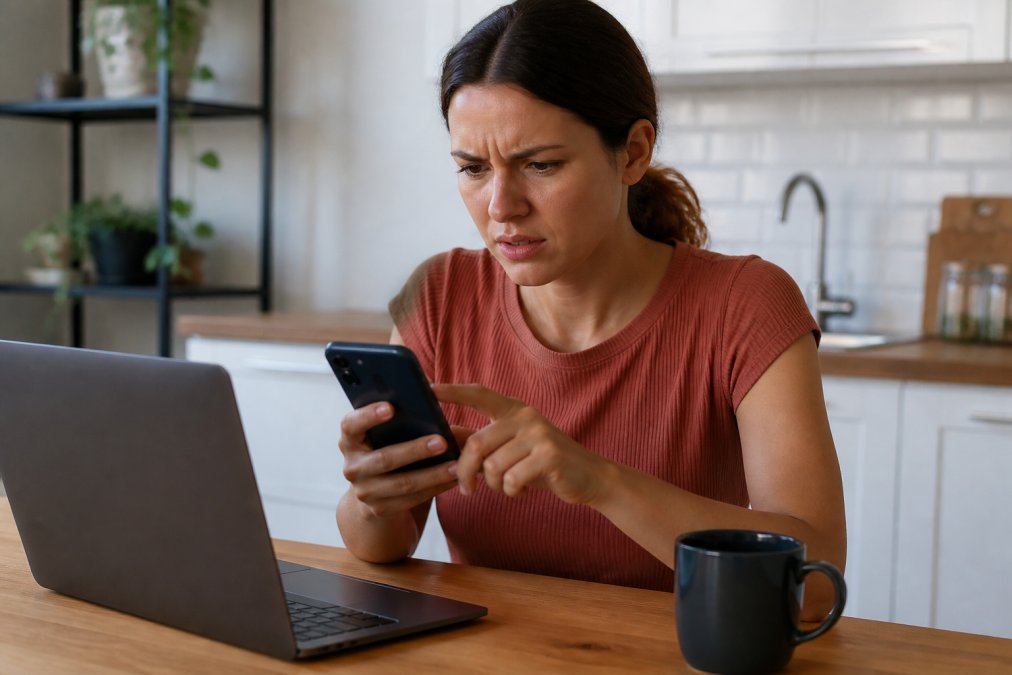
A verified purchase badge means the platform confirmed a transaction occurred. It does not mean the reviewer used the product, kept it, or wrote their own words.
Sellers can buy their own inventory through the review program, then post whatever they want. Some incentivize real buyers with gift cards or free product in exchange for a guaranteed positive rating, which still qualifies as a verified purchase. Treat the badge as one signal among several, never as proof of authenticity. FTC guidance on endorsements and reviews makes clear that material connections between a seller and a reviewer must be disclosed, but enforcement lags behind practice.
Red Flags of Manipulated Feedback
Manipulated feedback leaves fingerprints. Watch for these:
- A cluster of reviews posted within the same 24 to 48 hours
- Reviewers with only one or two total reviews across the entire platform
- Vague praise that could describe any product ("amazing quality," "love it")
- No photos, or photos that look like stock images
- Overly detailed technical language that reads like marketing copy
- Sudden rating drops followed by a wave of five-star reviews
One or two of these signals means little. Three or more together usually means the rating has been gamed.
Tools to Check Review Authenticity
Most shoppers never open a verification tool, which is exactly why fakes survive. The tools below are free or freemium, work in a browser, and take under a minute per product. None of them is a verdict, each is a filter that tells you where to look harder.
Browser Extension Verification Tools
Browser extensions are the fastest first pass. They sit on top of a retail page and score the review section in real time, flagging patterns a human eye skips: accounts created in the same week, near-identical phrasing across reviewers, sudden rating spikes, and reviewers whose entire history is five-star posts.
What to look for in an extension:
- Review-history analysis, does it show how many reviews a given account has left, and on what kinds of products?
- Phrase-clustering detection, does it flag reviews that share unusual word sequences?
- Timeline visualization, does it chart review volume by date so you can see a spike?
- Platform coverage, most extensions cover the largest marketplaces well and smaller sites poorly, so check before you trust a blank score.
A practical workflow: install one extension, open the product page, and read the score as a prompt rather than a conclusion. A low risk score on a product with 40 reviews is weak evidence. A high risk score on a product with 4,000 reviews is a strong reason to slow down and read the middle of the distribution yourself.
Reverse Image Searching Review Photos
Photos are the hardest part of a fake review to get right, which makes them the most useful thing to check. Fake reviewers recycle manufacturer images, lift photos from other listings, or pull stock images from the open web. A reverse image search catches all three.
Step by step:
- Right-click the review photo and choose Copy image address (or save the image to your device).
- Open a reverse image search engine, Google Images, Bing Visual Search, or TinEye all work.
- Paste the image URL or upload the saved file.
- Scan the results for the same image on other product pages, stock-photo sites, or manufacturer catalogs.
- If the same photo appears on three unrelated listings, it is not a customer photo, it is recycled marketing material.
A common pattern: a five-star review with a glossy, well-lit product shot that matches the manufacturer's own listing image pixel for pixel. Real customer photos are usually taken on a phone, on a counter or floor, with imperfect lighting and background clutter. Polish is a warning sign, not a virtue.
Reviewer Profile History
The single most underused check is the reviewer's own profile. Open it. Look at three things:
- Volume, an account with one review is not automatically fake, but an account with 200 reviews across unrelated categories is a professional.
- Tone consistency, the same breathless enthusiasm on a phone case and a vacuum cleaner is a tell.
- Timing, reviews posted in bursts on the same day suggest a paid batch.
What Tools Cannot Do
No extension, image search, or profile check can tell you whether a reviewer actually used the product for six months. Tools surface patterns; they do not replace reading the middle of the rating distribution yourself. Use them to narrow the field, then apply judgment to what is left.
Identifying Sponsored vs Organic Reviews
Identifying sponsored vs organic reviews comes down to disclosure, but disclosure is only the first layer. The second layer is language. Sponsored reviews tend to follow recognizable patterns, and once you can hear them, you can spot paid content even when the disclosure is buried or missing.
An organic review is written by a customer with no compensation or direction from the seller. A sponsored review involves payment, free product, or another incentive, and it should carry a clear disclosure. The FTC's Endorsement Guides require that sponsored content be disclosed clearly and conspicuously, and the FTC guidance on endorsements and reviews makes clear that material connections between a seller and a reviewer must be disclosed. In practice, enforcement lags behind the rule, and many disclosures are buried in fine print or phrased to obscure the connection.
The Linguistic Fingerprints of Paid Copy
Paid reviews share a vocabulary. Watch for:
- Superlative stacking, "absolutely incredible," "life-changing," "best purchase I've ever made" in the first sentence.
- Feature recitation, the review lists specs in the order the listing lists them, which is how marketing copy is written, not how customers talk.
- Missing friction, no shipping delay, no learning curve, no minor annoyance. Real use always produces at least one small complaint.
- Repetitive phrasing across reviews, the same unusual adjective ("sturdy," "premium," "game-changer") appearing in multiple reviews of the same product.
- Over-formatted structure, bulleted pros and cons with parallel grammar, which reads like a template.
A useful test: read the review aloud. If it sounds like a product page, it probably is one.
Why 'Verified Purchase' Is Not Proof
A verified purchase badge means the platform confirmed a transaction occurred. It does not mean the reviewer used the product, kept it, or wrote their own words. Sellers can buy their own inventory through the review program and post whatever they want. Some incentivize real buyers with gift cards or free product in exchange for a guaranteed positive rating, which still qualifies as a verified purchase. Treat the badge as one signal among several, never as proof of authenticity.
How Disclosure Rules Differ by Platform
Disclosure requirements are consistent in principle but inconsistent in practice. Some platforms require a label on incentivized reviews; others rely on the reviewer to self-disclose. Some place the disclosure at the top of the review; others tuck it into a footnote or a profile page. The practical result is that the absence of a disclosure label is not evidence that a review is organic, it may simply mean the platform does not enforce the label.
Here's a quick comparison of review sources and how much weight to give each:
| Review Source | Typical Reliability | Main Weakness |
|---|---|---|
| Verified purchase reviews | Moderate | Incentivized buyers still qualify |
| Incentivized or sponsored reviews | Low | Bias toward positive ratings |
| Expert or editorial reviews | Moderate to high | Limited product coverage |
| Peer-to-peer forums | High | Small sample sizes |
| Aggregated rating scores | Low to moderate | Easily gamed by volume |
Peer-to-peer communities tend to produce the most candid feedback because there's no incentive to flatter a seller. The trade-off is volume: you may only find a handful of opinions, and they won't cover every product.
Cross-Referencing Multiple Sources for Honest Product Reviews
The single most reliable method for finding honest product reviews is cross-referencing. Read the same product across at least three independent sources, then look for where the stories agree and where they diverge.
Start with the retailer's own page, then check an independent review site, then search a forum or community where owners discuss the product long after purchase. The retailer page tells you what sellers want you to see. The independent site adds editorial standards and testing. The forum tells you what breaks after six months.
When sources contradict each other, the disagreement itself is useful. If a retailer page shows nothing but praise while a forum is full of complaints about durability, believe the forum. Owners have no reason to soften their feedback.
How to Find Honest Product Reviews: A Step-by-Step Method
Use this sequence every time you're about to buy something you'll actually rely on:
- Sort reviews by most recent, not most helpful.
- Read the three-star reviews first for balanced detail.
- Check reviewer profiles for history and patterns.
- Scan for red flags: clustered dates, generic praise, missing photos.
- Reverse image search any suspicious customer photo.
- Cross-reference the product on at least two independent sources.
- Look for a clear disclosure on any review that reads like marketing.
- Compare what owners say after months of use against launch-day reviews.
This takes about ten minutes. It routinely saves shoppers from returns, replacements, and the slow disappointment of a product that never worked the way the listing promised.
That same standard is what guides our own curation at Value Market Plus. We look for tested products with a real track record, keep our return process simple, and staff support with actual people rather than a chatbot loop. If something doesn't work for your household, you can send it back without a fight.
Frequently Asked Questions
Where is the best place to get honest reviews?
No single site guarantees honesty, but the best approach is cross-referencing multiple sources. Look for platforms that enforce verified purchase badges, allow user-generated content without heavy moderation, and disclose affiliate relationships. Independent testing sites and consumer advocacy groups often provide more objective assessments than retailer pages. Always check if the reviewer has a clear editorial policy and whether they accept sponsored content. Combining these sources gives you a fuller picture.
How can you tell if an online product review is fake?
Watch for red flags like overly generic praise, repeated phrases across multiple reviews, and reviewer profiles with only one or two contributions. Fake reviews often lack specific details about how the product performed in real life. Check timestamps: a burst of five-star ratings within a few days can signal manipulation. Also, reverse image search any photos in the review to see if they appear elsewhere. If the review sounds like a marketing script, it probably is.
What are the red flags of a suspicious product review?
Suspicious reviews often use extreme language ('best ever,' 'life-changing') without concrete examples. They may focus on the seller's shipping speed rather than the product itself. Look for reviews that mention competitor names unprompted or include links. Another red flag is a reviewer who has posted identical text for different products. Finally, be wary of reviews that only appear during promotional periods and disappear later. These signs suggest manipulated feedback.
How do I verify if a review site is legitimate?
Start by checking the site's 'About' page and editorial policy. Legitimate sites disclose how they make money, whether through affiliate commissions or sponsored content. Look for a clear disclaimer about independent testing and objective assessment. Check if they have a physical address and real customer support contact. Also, see if their reviews include both pros and cons; a site that only praises products is likely biased. Cross-reference their ratings with other sources to spot inconsistencies.
The real challenge isn't finding reviews. It's finding reviews worth trusting, and that takes a method rather than a glance at the star rating. Value Market Plus makes the final step easier by stocking tested essentials, offering quick delivery, a clear refund policy, and real customer support when you need it. Shop now and buy with confidence, knowing the products on our shelves have already passed the scrutiny we just walked you through.