


Best Ways to Avoid Buyer Remorse: A Smart Shopping Guide
Table of Contents
- What Is Buyer's Remorse and Why It Happens
- Understanding Impulse Buying Triggers and Emotional Spending
- How to Research Products Before Buying
- Set a Realistic Budget and Define Your Needs vs. Wants
- The Benefits of a 24-Hour Cooling-Off Period
- Use Return Policies and Warranties to Reduce Purchase Anxiety
- Recovering From a Purchase You Already Regret
- Conclusion
Last Updated: August 29, 2026
What Is Buyer's Remorse and Why It Happens
Buyer's remorse is the feeling of regret or anxiety that strikes after making a purchase, often accompanied by doubt about whether you made the right choice. This post-purchase dissonance happens because of a psychological disconnect between expectation and reality. You imagined how a product would perform in your life, but the reality doesn't match the fantasy.
Buyer's remorse often strikes hardest on big-ticket items or when you're emotionally vulnerable. A stressful day, a moment of weakness, or pressure from marketing can push you into a decision you later regret. According to research on consumer behavior, impulse buying and emotional spending are the primary drivers behind purchase anxiety. The good news is that buyer's remorse is preventable if you approach shopping strategically.
Understanding Impulse Buying Triggers and Emotional Spending
Impulse buying follows predictable patterns, and recognizing these patterns is essential to avoid buyer remorse. The biggest triggers include stress, boredom, social pressure, and limited-time offers. When you're stressed, shopping feels like a reward. When a website says "Only 3 left in stock," your brain panics into action.

Emotional spending is particularly insidious because it feels justified in the moment. You tell yourself you deserve it or that you need it to feel better. These narratives are powerful, but they're temporary. Once the emotional state passes, so does the justification for the purchase.
A common mistake is shopping when you're in an extreme emotional state. Your judgment is compromised, your priorities shift, and your spending rules evaporate. The solution is to recognize when you're in that state and add friction to the decision-making process.
One practical approach is to implement a waiting period before any non-essential purchase. Add it to a wishlist and come back to it tomorrow. If you still want it after 24 hours, the impulse has probably faded, and you can make a more rational decision.
How to Research Products Before Buying
Research is your most powerful tool for avoiding buyer remorse. Before you buy anything beyond a dollar or two, you should know what you're getting into. This means reading reviews, understanding specifications, checking return policies, and comparing alternatives.
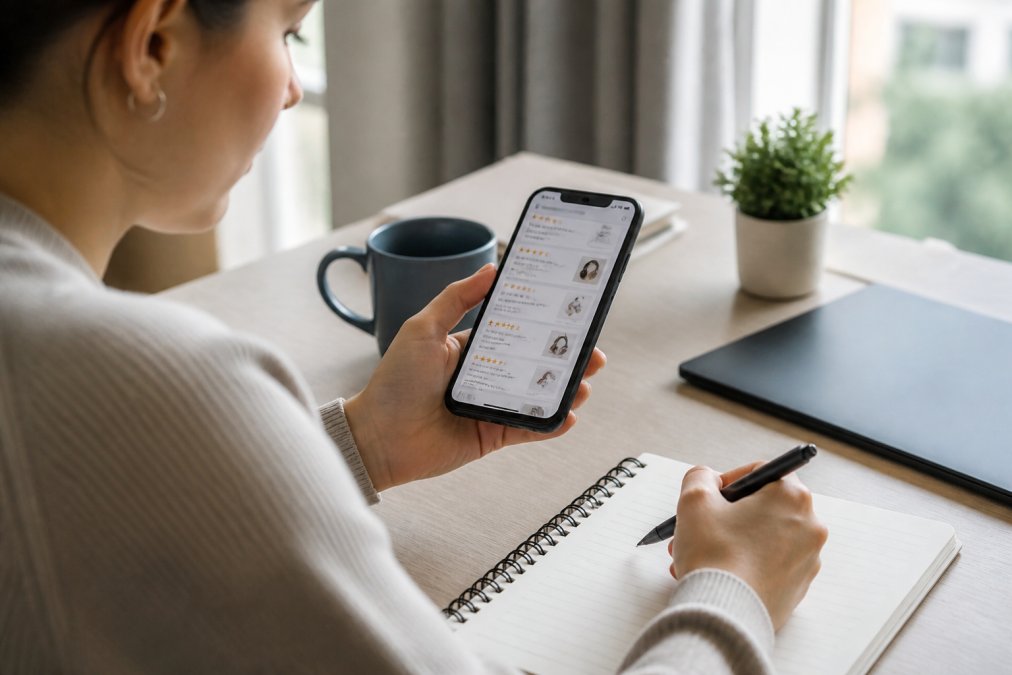
Start by reading reviews from multiple sources. Don't just scan the five-star summaries. Read the three and four-star reviews where people describe real-world problems. Look for patterns. If 20 people mention the same issue, it's a real problem, not a fluke.
Pay attention to who's reviewing. A five-star review from someone who bought the product yesterday is less useful than a three-star review from someone who's owned it for six months. Recent reviews matter more for products that might deteriorate over time or have durability issues.
Next, understand what you're actually buying. Read the full product description, not just the headline. Check dimensions, materials, power requirements, and any assembly needs. Watch unboxing videos if they're available. Many purchase regrets come from surprises: the item was smaller than expected, required batteries you don't have, or looked different in person than in photos.
Compare alternatives before deciding. Look at two or three competitors in the same category. What's the price difference? Which one has better reviews for your specific use case? This comparison takes 15 minutes but prevents months of regret.
Set a Realistic Budget and Define Your Needs vs. Wants
One of the clearest paths to buyer's remorse is spending more than you intended or buying something you didn't actually need. Setting a budget upfront creates a rational constraint that prevents emotional decisions from spiraling.
Start by defining what you actually need versus what you want. A need solves a real problem or fills a genuine gap. A want would be nice to have but isn't essential. Needs have better long-term satisfaction. You don't regret buying something that solves a real problem.
Before you buy, ask yourself: What problem does this solve? What will I use it for? How often will I actually use it? If you can't answer these questions clearly, it's probably a want, not a need.
Set a spending limit before you shop. Decide how much you're willing to spend on this category this month. When you hit that limit, stop. This simple rule prevents the "just one more thing" spiral that leads to buyer's remorse.
For larger purchases, use the 30-day rule. If you've been thinking about buying something for 30 days and you still want it, it's probably worth considering. If you forgot about it, it was just an impulse.
The Benefits of a 24-Hour Cooling-Off Period
The cooling-off period is one of the most effective tools for avoiding buyer's remorse: wait 24 hours before making any non-essential purchase. This single practice eliminates most impulse buying and prevents countless regrets.
Why does this work? Impulse and emotional spending are driven by immediate emotional states that fade quickly. When you're excited about a product or anxious about missing out, your judgment is compromised. But 24 hours later, you've probably returned to baseline, and the emotional urgency has dissipated.
During that 24-hour period, do something else. Don't keep the browser tab open. Let your brain process the decision in the background. When you come back to it the next day, you'll have a much clearer sense of whether you actually want it.
This cooling-off period also gives you time to research. You can read reviews, compare prices, check return policies, and think through whether this purchase aligns with your budget and goals. By the time 24 hours have passed, you'll have far more information than you did in the initial moment of impulse.
For Value Market Plus customers, this approach pairs perfectly with our simple refund policy and quick delivery. You can take your time making the decision, knowing that if you do buy something and change your mind, the return process is straightforward.
Use Return Policies and Warranties to Reduce Purchase Anxiety
One of the biggest sources of purchase anxiety is the fear that you're stuck with a bad decision. A clear, simple return policy removes the risk from buying. You're not committing to keeping something forever; you're committing to trying it.
Before you buy anything, check the return policy. How many days do you have to return it? Is there a restocking fee? Do you have to pay for return shipping? These details matter because they determine how easy it actually is to undo a bad purchase.
The best return policies have no catches: no restocking fees, free return shipping, and full refunds. These policies signal that the company stands behind its products. When you see this kind of policy, it reduces your anxiety about buying.
Warranties serve a similar function for durability concerns. If a product has a one-year warranty, you know that if something breaks in normal use, you're covered. This matters especially for household essentials and comfort products that you'll use regularly.
Value Market Plus's clear, simple refund policy is designed with this in mind. We want our customers to shop with confidence, knowing that if something doesn't work for their situation, they can return it without hassle.
Recovering From a Purchase You Already Regret
Sometimes buyer's remorse hits after you've already bought something. If this happens, don't panic. Most purchases can be undone. Check the return window immediately and start the return process right away rather than sitting with the regret.
If the product is unopened or barely used, returning it is straightforward. Most retailers, including Value Market Plus, make this easy. You contact customer support, initiate the return, and send the item back.
If you're past the return window, consider alternatives. Can you sell it online? Facebook Marketplace, eBay, or local buy-and-sell groups often have buyers for gently used items. You might recover 50-70% of what you paid. Can you give it to someone who would actually use it? Donating items you regret buying can feel better than keeping them.
The most important thing is to avoid compounding the regret. Don't buy something else to make yourself feel better about the first bad purchase. Instead, learn from the experience. What triggered this purchase? Was it emotional spending? Did you skip the research step? Understanding what went wrong helps you avoid the same mistake next time.
Conclusion
Buyer's remorse is preventable. It's not about having perfect judgment; it's about building systems that filter out impulse buying and give you time to make rational decisions. Understanding your emotional triggers, researching before you buy, setting a realistic budget, using a 24-hour cooling-off period, checking return policies, and knowing how to recover if regret does strike work together to protect you from post-purchase regret.
The best way to avoid buyer remorse is to shop with intention. At Value Market Plus, we've built our entire experience around this principle. Our tested, curated selection of household essentials and trending home products removes the guesswork. Our real customer support team helps you find exactly what you need. And our clear, simple refund policy means you can shop with confidence, knowing that if something doesn't work for your situation, returning it is hassle-free.
| Strategy | When to Use | Expected Impact |
|---|---|---|
| 24-hour cooling-off period | All non-essential purchases | Eliminates 80% of impulse buys |
| Research reviews and specs | Before any purchase over $20 | Catches product mismatches early |
| Budget setting | Before shopping sessions | Prevents spending spirals |
| Return policy check | Before checkout | Reduces purchase anxiety |
| Needs vs. wants assessment | During product consideration | Filters wants from genuine needs |
Consumer Financial Protection Bureau guidance on purchase protections
American Psychological Association research on impulse buying behavior
Federal Trade Commission consumer protection guidelines for online shopping
Frequently Asked Questions
What is the 24-hour rule for shopping?
The 24-hour cooling-off period is a deliberate pause you give yourself before making a purchase. After adding an item to your cart or deciding to buy, wait a full day before completing the transaction. This breaks the emotional momentum of impulse buying and gives you time to assess whether the purchase aligns with your actual needs. Many retailers, including Value Market Plus, support this practice through their clear return policies, which let you shop with confidence knowing you have time to reconsider.
How can I stop impulse buying triggers from affecting my decisions?
Recognize common impulse buying triggers like limited-time offers, social media pressure, stress-based shopping, and flashy product photography. When you spot these psychological triggers, pause and ask yourself: Do I need this, or do I want it right now? Unsubscribe from promotional emails, limit browsing during stressful moments, and read real customer reviews instead of relying on marketing images. Setting a strict budget before shopping and sticking to a list also prevents emotional spending from derailing your financial stability.
How do I research products before buying to avoid buyer's remorse?
Start by reading verified customer reviews from multiple sources to understand real-world performance, not just marketing claims. Check product specifications against your actual needs, watch unboxing videos if available, and compare similar options side by side. Look for return policies and warranty information before purchasing. Value Market Plus products are tested and curated specifically to help you make confident choices. Don't rely solely on product photos; seek honest feedback from people who've already used what you're considering buying.
What should I do if I'm already experiencing buyer's remorse?
First, check the return window and your retailer's refund policy immediately. Most retailers, including Value Market Plus, offer straightforward return processes with real customer support to help you. If the purchase is within the cooling-off period, initiating a return is often the fastest path to resolving post-purchase dissonance. If you're outside the return window but the item truly doesn't work for you, contact customer service to discuss options. Document any issues with photos or videos. Remember that some buyer's remorse fades once you've actually used the product; give yourself a fair trial period before deciding.
This article was written using GrandRanker