


Best Ways to Return Online Purchases: 2026 Guide
Table of Contents
- Understanding Return Policies Before You Ship Anything Back
- How to Return Online Purchases: Step-by-Step
- How to Package Items for Return Shipping
- Customer Service Return Request Templates That Actually Work
- Return Refund Processing Time: What to Expect
- Protecting Your Account: Return Fraud Prevention Tips
- Smarter Ways to Return Online Purchases: QR Codes, Box-Free Returns, and Sustainable Options
- Conclusion
Last Updated: August 20, 2026
The best ways to return online purchases have changed significantly, and most shoppers are still using slower methods than necessary. The difference between a refund that lands in two days and one that drags on for three weeks almost always comes down to a few key decisions made before the package leaves your hands. This guide walks you through every step, from reading return policies to choosing between QR code drop-off and traditional mail-in returns, so you get your money back with minimal friction.
Understanding Return Policies Before You Ship Anything Back
Most return headaches are self-inflicted because shoppers skip the return policy and assume everything works the same way everywhere. It doesn't.
Return Windows, Restocking Fees, and Non-Returnable Items
A return window is the number of days from delivery (or purchase) to initiate a return. Many retailers set this at 30 days, but it varies widely. Electronics, software, and personal care items often carry shorter windows or are non-returnable entirely. Missing the deadline by even one day typically voids your eligibility.
Restocking fees are another surprise. Some retailers deduct a percentage from your refund if the item has been opened or used. Check whether the fee applies to your product category before you buy.
Non-returnable items commonly include:
- Opened consumables and food products
- Digital downloads and software licenses
- Customized or personalized items
- Intimate apparel and swimwear (for hygiene reasons)
- Hazardous materials
According to the Federal Trade Commission's consumer guidance on mail-order returns, retailers must clearly disclose their return policies, but the burden is on you to read them. Take two minutes before checkout.
Digital Receipt Management: Keep Proof of Purchase Ready
Proof of purchase is your most important asset in any return. Without it, most retailers will deny the return or offer only store credit.
Create a dedicated email folder for order confirmations and shipping notifications. For physical receipts, photograph them immediately since thermal paper fades within months. Cloud storage apps work well for this.
Save:
- Order confirmation email with the order number
- Shipping confirmation with your tracking number
- Any communication about the product (warranty emails, promotional terms)
This takes thirty seconds per order and eliminates one of the most common return obstacles.
How to Return Online Purchases: Step-by-Step
Returning online purchases efficiently comes down to three steps: initiate through the right channel, choose your drop-off method, and secure your label before the return deadline passes.
Step 1: Start Your Return Through the Retailer's Return Portal
Log into your account on the retailer's website and navigate to your order history. Find the item you want to return. Most retailers now have a self-service return portal that generates a return authorization (sometimes called an RMA) automatically.
Do not call customer service first unless the portal is broken or your item is defective. Self-service portals are faster, create a paper trail, and start your return window clock immediately. When prompted, select an accurate reason for the return. Specific reasons like "item arrived damaged" or "wrong size sent" process more slowly than vague ones like "changed my mind."
Step 2: Choose Mail-In or In-Person Drop-Off
Once your return is authorized, you'll typically choose between mailing the item back or dropping it off at a physical location.
| Option | Best For | Typical Processing Time | Key Requirement |
|---|---|---|---|
| Mail-in return | Bulky items, rural areas | 5-10 business days | Packaged and labeled |
| In-person drop-off | Speed, no packaging needed | 2-5 business days | QR code or label |
| In-store return | Immediate credit | Same day | Proof of purchase |
In-person drop-off at a parcel drop-off location (UPS Store, FedEx Office, USPS post office, or retail partners like Kohl's or Staples) generally processes faster because the package enters the carrier's system immediately.
Step 3: Get Your Shipping Label or QR Code
After selecting your return method, the retailer will send you either a printable shipping label or a QR code for a label-free return. The QR code option is increasingly common and genuinely easier. You show the code at the drop-off counter, the associate scans it and prints the label on-site, and you walk out without needing a printer.
If you receive a printable label, print it immediately. Don't wait until the day you plan to ship.
How to Package Items for Return Shipping
Packaging a return correctly protects you from refund denial due to damage during transit.
Return items in their original packaging whenever possible. Retailers inspect returned goods, and original packaging signals proper storage and provides correct fit and cushioning.
What to Do If You Lost the Original Packaging
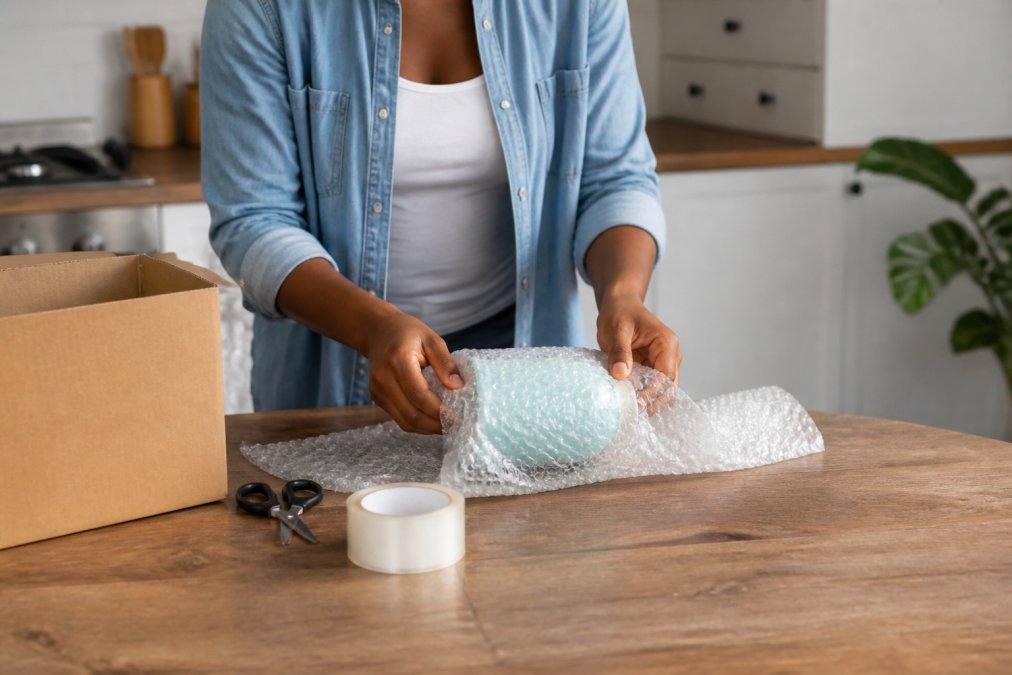
Original packaging isn't always available, and most retailers accept returns without it. Use a sturdy corrugated box close to the item's size. Avoid thin cardboard mailers for anything fragile. Fill empty space with packing paper or bubble wrap so the item can't shift during transit.
Include inside the box:
- A copy of your return authorization or packing slip
- Your order number written on a piece of paper (backup in case the label falls off)
- All original accessories, manuals, and components
Documenting Damage or Defects Before You Ship
If you're returning a defective item or damaged goods, document everything before you seal the box. Take clear photos and short video clips showing the damage from multiple angles. Note the date and time.
This documentation protects you if the retailer claims the damage happened during return shipping and speeds up the return confirmation process. Email the documentation to customer service with your return authorization number in the subject line.
Customer Service Return Request Templates That Actually Work
The way you phrase a return request affects how quickly it gets processed. Clear, factual messages get resolved in one exchange.
Template 1: Standard return (no defect)
Hi, I'd like to initiate a return for Order #[ORDER NUMBER], placed on [DATE]. The item is [PRODUCT NAME]. Reason for return: [brief, factual reason]. Please send a prepaid return shipping label or QR code to this email address. My return window closes on [DATE].
Template 2: Defective or damaged item
Hi, I received Order #[ORDER NUMBER] on [DATE] and the item arrived with [specific defect, e.g., "a cracked housing on the left side"]. I've attached photos documenting the damage. I'd like a full refund rather than an exchange. Please advise on next steps and confirm whether a return label is required.
Return Refund Processing Time: What to Expect
Return refund processing time is the period between when the retailer receives your returned package and when the money appears in your account. This is a two-stage process.
Stage one is transit time. Once you drop off the package, the shipping carrier moves it back to the retailer's warehouse, typically taking two to seven business days depending on distance and carrier.
Stage two is warehouse processing. The retailer's team inspects the item, confirms the return, and triggers the refund, taking an additional two to five business days. Payment processors then take one to three business days to post the credit.
Total realistic timeline: five to fifteen business days from drop-off to refund in your account.
Exchange vs. Refund: Which Gets Your Money Back Faster
Exchanges generally process faster than refunds because the retailer doesn't need to reverse a financial transaction. Many retailers ship the replacement item as soon as the return tracking shows the original package is in transit.
Refunds require the item to be received, inspected, and approved before any money moves. If speed matters more than getting a different product, an exchange is faster. If you simply want your money back, a refund is cleaner.
Protecting Your Account: Return Fraud Prevention Tips
Return fraud is a real problem for retailers, and legitimate customers sometimes get flagged. Many retailers track return merchandise authorization history per account. If your account shows a high return rate, especially for high-value items, you may face stricter scrutiny or slower processing.
Practices that protect your account health:
- Return only items you genuinely need to return. Wardrobing (buying with the intent to use and return) is tracked and flagged.
- Use the correct return reason. Claiming an item is defective when it isn't creates a mismatch between your account history and the warehouse inspection report.
- Keep your return receipts. If a return is ever disputed, you need proof that you dropped the package off.
- Don't return to a different account. Returning items purchased on one account using a different account's label is a red flag.
As noted in the National Retail Federation's annual retail security survey, return fraud costs retailers billions annually, which is why automated detection systems have become standard practice. Staying on the right side of those systems is straightforward as long as your returns are legitimate and well-documented.
Smarter Ways to Return Online Purchases: QR Codes, Box-Free Returns, and Sustainable Options
The most convenient ways to return online purchases today don't require a printer, a box, or even tape in some cases. QR code and box-free return programs have expanded significantly across major shipping carriers and retail networks.
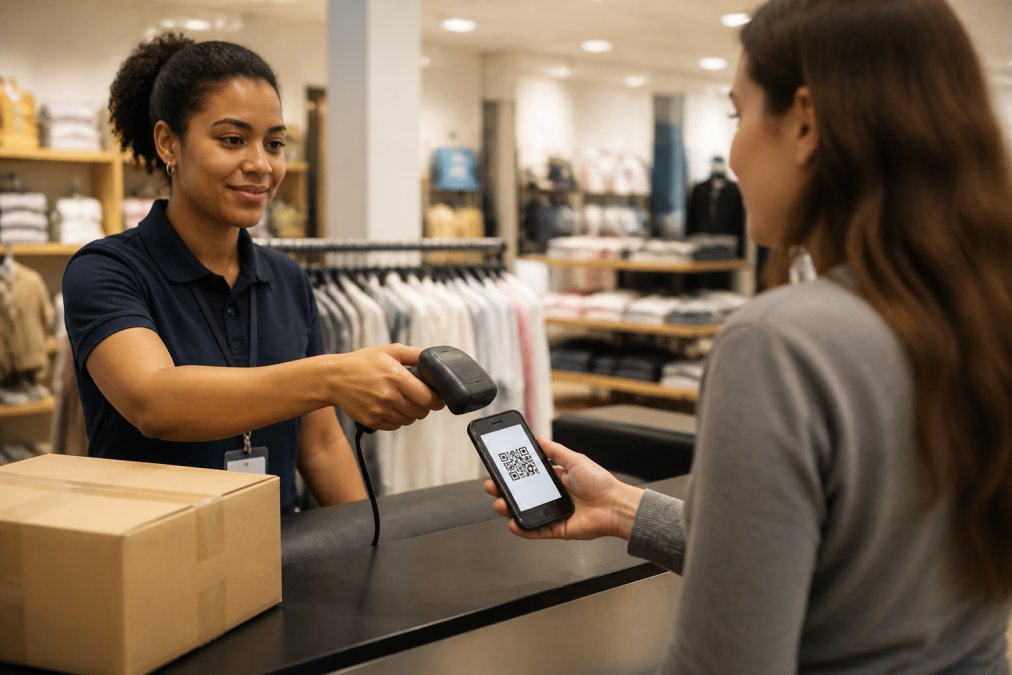
QR code returns work like this: the retailer sends a QR code to your email or app. You bring the item to an authorized drop-off location. The associate scans your code, prints the label, and handles the rest. No printer required. The tracking number is generated automatically and emailed to you.
Box-free returns go one step further. Some carrier programs accept items with just the QR code and no box at all. The associate repackages the item at the counter. This is particularly useful when you've already discarded the original packaging.
On the sustainability side, consolidating returns matters. Shipping one return package instead of three separate ones reduces the carbon footprint. Some retailers now offer the option to hold your return until they can batch it with other returns from your area, which is worth selecting if your refund timeline isn't urgent.
For international purchases, the process is more complex. International return logistics typically involve customs declarations, longer transit windows (often three to six weeks), and potentially higher return shipping costs that the retailer may not cover. Always check whether a retailer offers international return labels before purchasing from outside the country.
Value Market Plus is built around the idea that shopping should feel safe, not stressful. That means a clear return policy, real people available when something goes wrong, and products that are tested before they're listed so returns are the exception, not the rule. When you shop with confidence from the start, the return process rarely comes into play.
Frequently Asked Questions
How do I get a shipping label if I want to return something I ordered online?
Log into your account on the retailer's website and go to your order history. Most retailers let you initiate a return directly from the order page, where you can print a prepaid shipping label or receive a QR code for a label-free return. If you cannot find the option, contact customer support and request a return merchandise authorization (RMA) along with a label. Some retailers email the label automatically once your return is approved.
How long does it usually take to receive a refund for an online return?
Return refund processing time varies by retailer. Once your package is received and passes package inspection, most retailers process refunds within 3 to 10 business days. Your bank or card issuer may add another 2 to 5 business days before the credit appears. Store credit refunds typically post faster than refunds to a payment card. Always save your tracking number so you can confirm delivery and follow up with customer support if the refund is delayed.
What should I do if I lost the original packaging for a return?
Check the retailer's return policy first, many accept returns without original packaging as long as the item is in its original condition. Use a sturdy box of similar size, wrap the item securely in bubble wrap or packing paper, and include any accessories or documentation that came with it. Avoid using a damaged or flimsy box. Attach your return label clearly on the outside and keep your return receipt and tracking number until the refund is confirmed.
Which items are typically non-returnable when buying online?
Most retailers exclude certain categories from their return policy. Common non-returnable items include opened personal care products, digital downloads, perishable goods, customized or personalized items, and anything marked as final sale at checkout. Hazardous materials and items without proof of purchase are also typically excluded. Always read the return policy before buying, especially for health, hygiene, or clearance products, to avoid surprises if you need to return online purchases later.
Returns are one of those things that feel complicated until you've done them correctly a few times. The real challenge isn't the process itself; it's knowing which steps matter and in what order. If you're looking for a shopping experience where the return policy is straightforward, the products are worth keeping, and customer support is handled by actual people, Value Market Plus delivers on all three. Shop Now and discover why over 5,000 customers have rated us 4.9 out of 5.
This article was written using GrandRanker